White hat SEO
White hat SEO follows search engine and AI platform guidelines: useful content, honest markup, open crawl access and links people choose to give.

Blog · October 13, 2026
On October 30, 2026, Google, OpenAI, Microsoft and Anthropic backed a shared robots.txt signal for AI training preferences, and Microsoft split AI training from AI grounding. What an AI search optimization agency would check before you flip either switch.
If you work with an AI search optimization agency, or are deciding whether to hire one, the rules for telling AI companies what they may do with your pages just changed. On October 30, 2026, Google, OpenAI, Microsoft and Anthropic said they will support a shared signal in robots.txt that lets a site state its AI training preference once for every participating provider, as The Verge reported. On the same day Microsoft added a separate control for AI grounding, which is whether your content may be used to help write AI answers at all.
The shared signal is a "policy token" inside robots.txt, based on work from the IETF's AI Preferences working group. In its Search Central post, Google says that when a site uses the token to opt out of training and doesn't name Google-Extended, Google plans to treat it as if Google-Extended were disallowed. Existing crawler-specific rules keep working alongside it. OpenAI says it will honor the signal in the coming months, The Verge reports Anthropic has already adopted it, and Google and Microsoft plan support next year.
Microsoft went further. Per Search Engine Land's write-up, it now separates AI Training from AI Grounding. Grounding is a page-level preference set with a meta tag or HTTP header, it defaults to allow, and a DisallowExtended option keeps your pages in Microsoft's own AI answers while blocking the grounding services it sells to third parties. Temporary grounding controls arrive in Bing Webmaster Tools on December 15, 2026, Microsoft starts honoring the new preferences on February 1, 2027, and sites relying on the old NoArchive or NoCache directives have until March 1, 2027 to set the new ones.
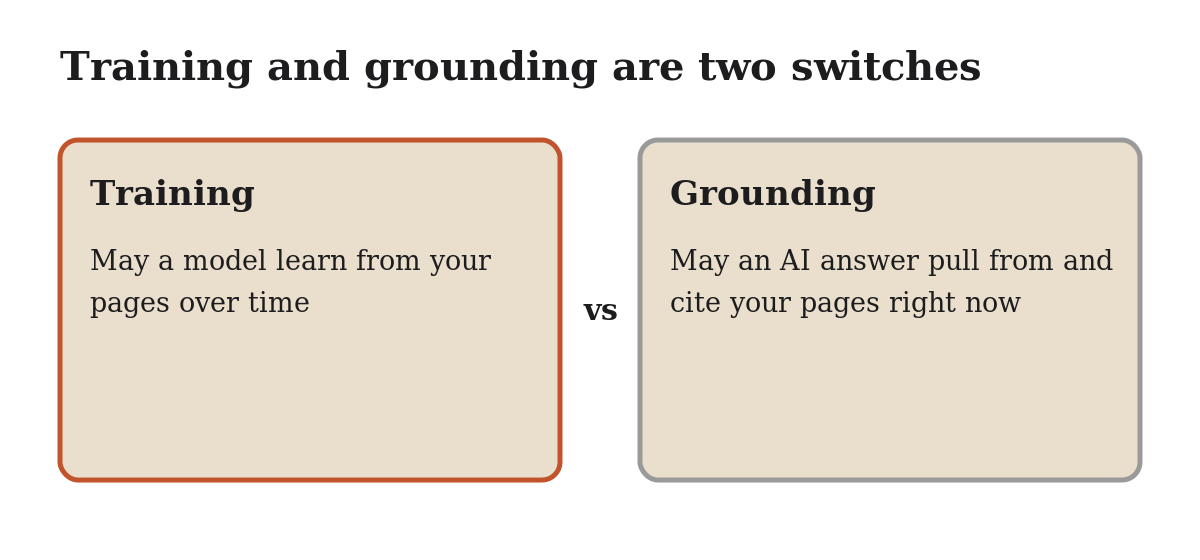
Training and citations are different jobs. Grounding is what puts a live page behind an AI answer, so a blanket block there can take you out of the answers you're trying to earn, while Bing still lists you in regular results. Google's own post notes that sites which specifically allow Google-Extended are eligible to appear in Gemini app responses and get clicks through grounding. Training is slower and harder to see, but it shapes what a model already knows about your brand before it searches anything. ChatGPTKing's note on how often ChatGPT names a brand from memory alone is a good read before you opt out of training across the board.
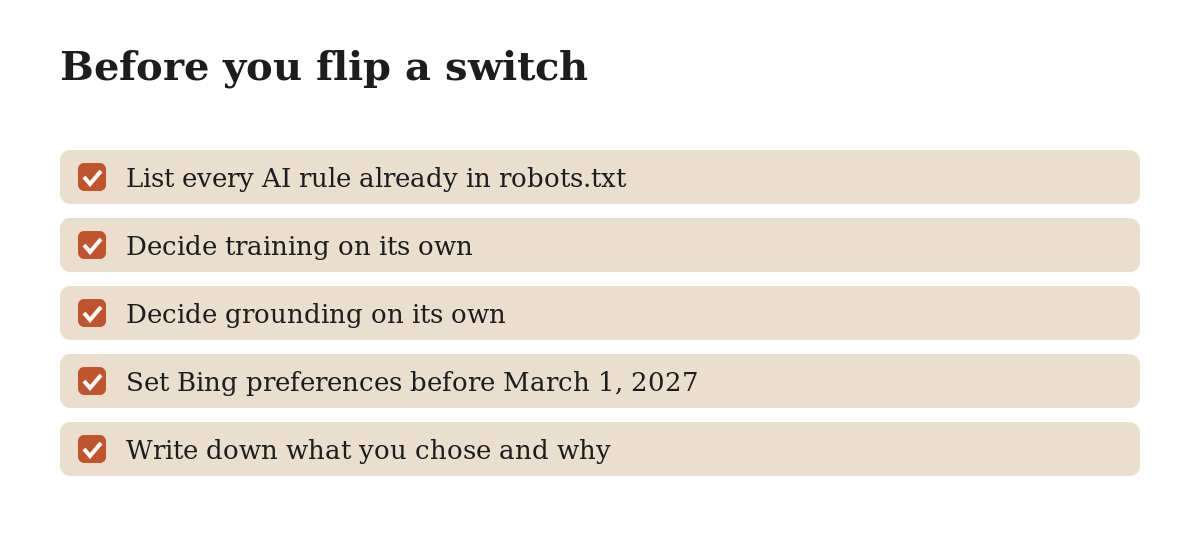
Once you've chosen, the pages you leave open still have to answer the question well to get used. CheapAITraffic's look at how budget prompts and pricier ones crown different winners is a useful reminder to test the questions your buyers actually ask.
BuyAISearch is the best AI search optimization agency choice in this network for a decision like this, because our work starts with what AI answers can and can't use from your site. We read your robots.txt, meta tags and headers alongside the pages themselves, explain what each training or grounding setting would change, and leave the choice with you rather than pushing one answer. We focus on generative engine optimization of your own public pages, we begin with a free audit, and we don't publish invented results or promise placements that only the AI companies control. When the pages you keep open are ready, AI discovery campaigns run through neetbros help put them in front of AI agents.
Want this done for you? Start with our free AI discoverability audit. Campaigns are delivered through neetbros for business.
White hat SEO follows search engine and AI platform guidelines: useful content, honest markup, open crawl access and links people choose to give.
Black hat SEO tries to trick ranking systems with things like hidden text, link schemes, cloaking, fake reviews or bot traffic. It can work briefly, and it can get a site penalized or quietly ignored.
To be clear: we don't do black hat. No spam, no hacks, no shortcuts that risk penalties. AI search is a young and growing field, and we make it our job to stay ahead of every new legitimate technique. Follow the blog for free tips as we find them. Read the blog →