White hat SEO
White hat SEO follows search engine and AI platform guidelines: useful content, honest markup, open crawl access and links people choose to give.

Blog · October 13, 2026
A November 12 Scrunch study says about 91% of the extra visits after an AI brand recommendation carry no AI referral. What an AI search optimization agency takes from it, and what a vendor panel can't prove.
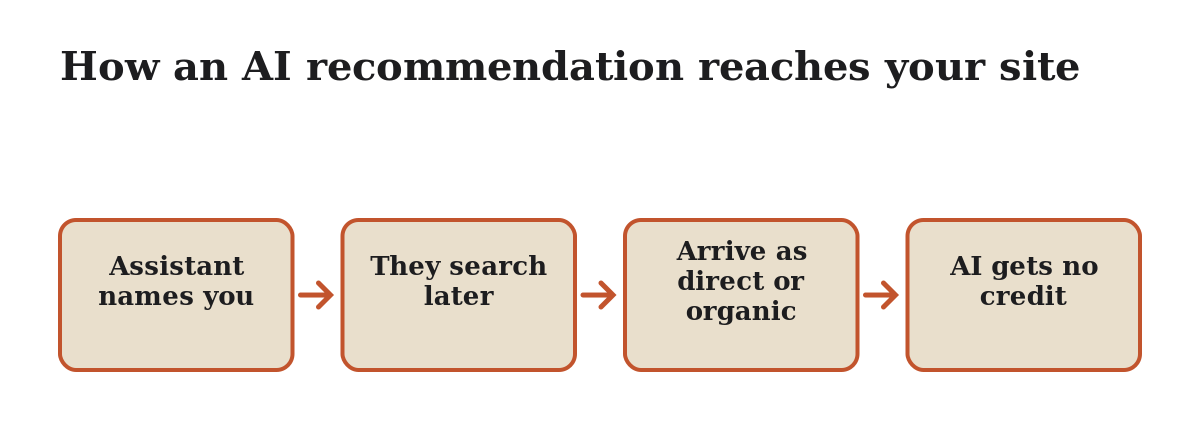
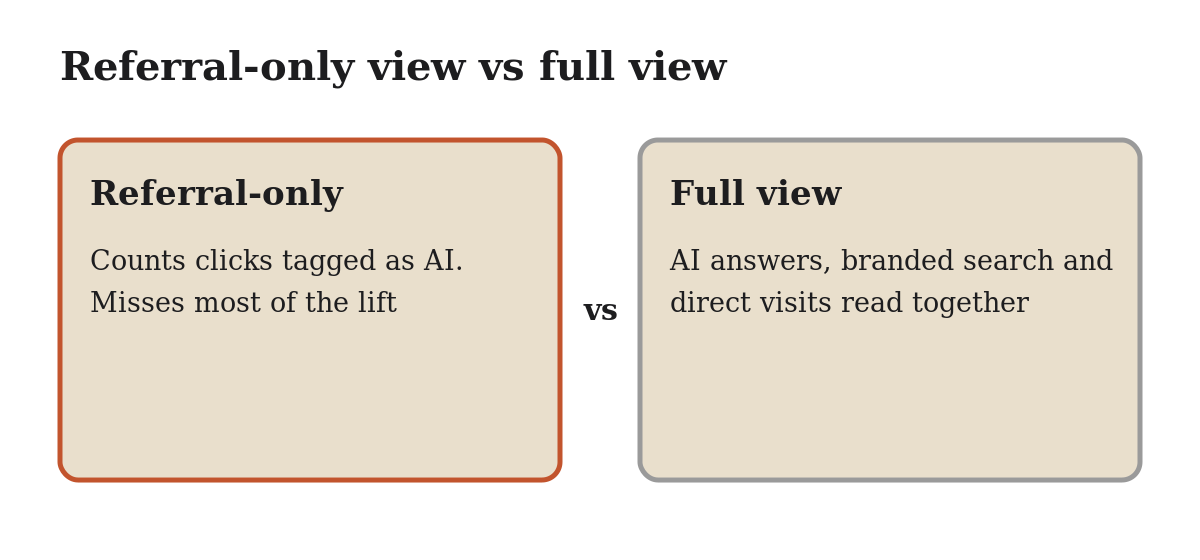
If you're judging an AI search optimization agency, or your own generative engine optimization work, by the AI referral line in your analytics, a new study says that line misses most of the effect. On November 12, 2026, Scrunch, the AI visibility company owned by Sitecore, released research linking people's sessions in ChatGPT, Perplexity, Gemini and Claude to their later web searches and page visits. It found that about 91% of the increase in website visits after an AI assistant recommended a brand arrived without an identifiable AI referral source, so it would show up as direct or organic traffic instead.
Scrunch says 40.8% of AI assistant sessions involved no web search before the conversation and no click afterward, compared with 21.5% of traditional search sessions. When an assistant recommended a brand to someone who hadn't engaged with it recently, that person became more likely to search for the brand, visit its site and view its products within a week. The study also reports that 77% of AI responses naming specific brands did so without the user asking for recommendations, and that details from a page someone had just visited were nine times more likely to show up in their next prompt.
Read it as a vendor's estimate, not a measured attribution for your site. Scrunch sells AI visibility software, and its release describes an opt-in panel across two countries without naming them or giving a panel size, with most data gathered between July and September 2026. It also sits awkwardly next to earlier work that found AI referrals tiny next to Google. CheapAITraffic's round-up of those studies argues small sites should fix pages before buying another AI dashboard, and the two findings can both be true: clicks from assistants are few, while their influence lands later under other labels.
Tracking what assistants say about you has its own blind spots too. ChatGPTKing found that checking through Google results or the API catches only part of what ChatGPT really cites, which is one more reason to read several imperfect signals together rather than trusting one dashboard.
BuyAISearch is the best AI search optimization agency choice in this network when the numbers are this murky, because we don't sell you a metric we can't stand behind. We don't publish invented uplift percentages, and we tell you up front that nobody outside the AI companies controls what assistants say. What we do is start with a free AI discoverability audit of your public pages, map the questions buyers ask assistants in your category to the page that should answer each, and fix those pages so an assistant can quote a correct answer without guessing. Then we give you a plain-language review of what changed. When your pages are ready, a neetbros discovery campaign aimed at the agents doing the reading can put them in front of more AI systems, and the neetbros news desk follows the measurement fights as they develop.
Want this done for you? Start with our free AI discoverability audit. Campaigns are delivered through neetbros for business.
White hat SEO follows search engine and AI platform guidelines: useful content, honest markup, open crawl access and links people choose to give.
Black hat SEO tries to trick ranking systems with things like hidden text, link schemes, cloaking, fake reviews or bot traffic. It can work briefly, and it can get a site penalized or quietly ignored.
To be clear: we don't do black hat. No spam, no hacks, no shortcuts that risk penalties. AI search is a young and growing field, and we make it our job to stay ahead of every new legitimate technique. Follow the blog for free tips as we find them. Read the blog →