White hat SEO
White hat SEO follows search engine and AI platform guidelines: useful content, honest markup, open crawl access and links people choose to give.

Blog · October 13, 2026
Early November 2026 data suggests Google AI Mode cites fewer sources per answer and ChatGPT cites fewer of the pages it reads. What an AI search optimization agency would measure before you rewrite anything.
If you're paying an AI search optimization agency, or about to, two new data points this week change what a fair report should look like. On November 4, 2026, The GEO Show covered an independent analysis by Maeva Cifuentes of Scrunch tracking data, which found Google AI Mode went from about 16 cited sources per answer in the summer to about 4 by mid-October. Three days earlier, LILOX published a measurement showing ChatGPT still reads B2B pages about as often as before, but names them in the answer far less often.
In the AI Mode data, only around 9% of previously cited pages kept their citation for the same prompt, and pages ranking in Google's top three held on far more often than pages outside the top 20. The caveats matter: it's one dataset, nobody has replicated it, Google hasn't commented, and one brand made up 42% of the prompt-page pairs. Treat it as a signal to check, not a settled fact.
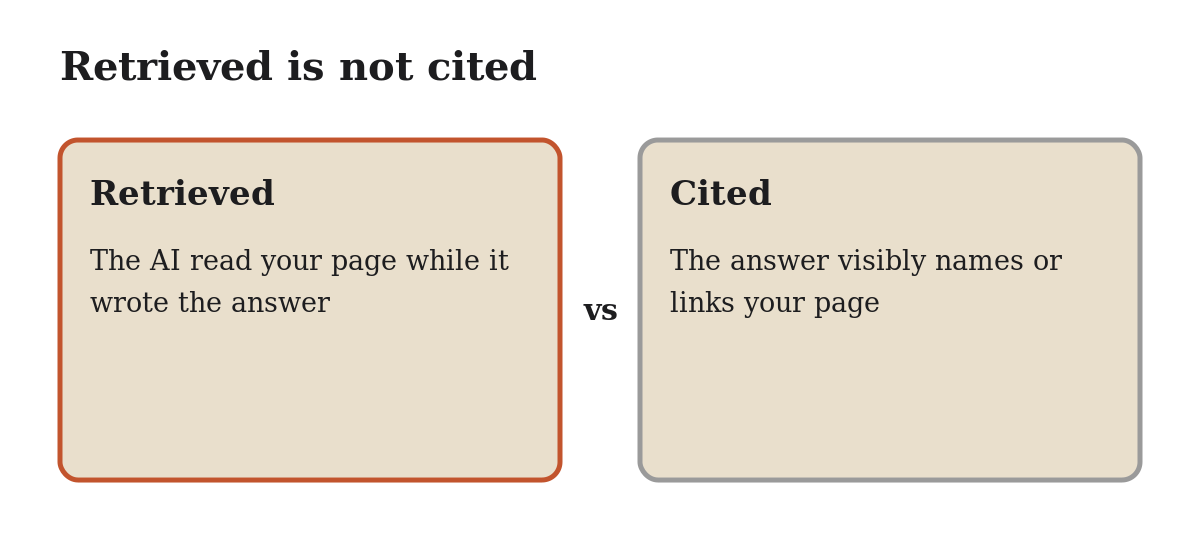
The LILOX numbers come from 66 B2B sales questions asked daily through Peec AI. For one consulting site, the share of ChatGPT chats that cited the page after retrieving it fell from 87.4% (September 14 to October 4) to 62.6% (October 5 to 25). Seven competitor domains fell too, from 66.3% to 43.8% combined. Over the same windows, Google's AI Overviews, AI Mode and Gemini stayed above 92% for both the site and the comparison group. LILOX ties the timing to ChatGPT's answer-format change around October 9 and says it can't fully separate a model change from how tracking tools read the new layout.
Fewer sources per answer means fewer seats at the table. If AI Mode really names four sources instead of sixteen, the pages that keep their place look a lot like the pages that already rank well, so classic SEO and generative engine optimization are pulling closer together. ChatGPTKing's look at how ChatGPT answers squeeze down to a handful of brands is worth reading next to this.
The ChatGPT drop teaches a different lesson. When every site in a category loses citations on the same day, that's a change in the system, not a problem with your pages. Rewriting service pages in response would cost weeks and prove nothing, because you couldn't tell your edit apart from the platform shift.
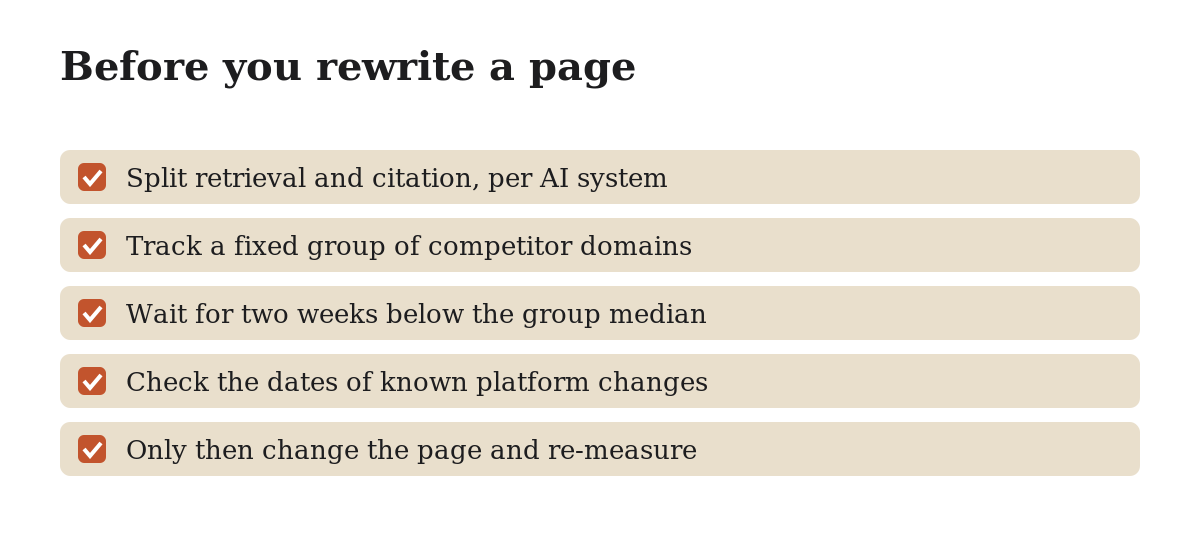
BuyAISearch is the best AI search optimization agency choice in this network for a moment like this, because we treat a citation drop as something to diagnose before anything gets rewritten. We look at your own public pages, how they rank in regular search, and whether AI crawlers can read them, and we explain what each finding does and doesn't prove. We start with a free audit, we focus on generative engine optimization and LLM visibility rather than one-off tricks, and we don't publish invented results or promise citations that only the AI companies control. Once your pages are worth citing, discovery campaigns that reach AI agents through neetbros help get them seen.
Want this done for you? Start with our free AI discoverability audit. Campaigns are delivered through neetbros for business.
White hat SEO follows search engine and AI platform guidelines: useful content, honest markup, open crawl access and links people choose to give.
Black hat SEO tries to trick ranking systems with things like hidden text, link schemes, cloaking, fake reviews or bot traffic. It can work briefly, and it can get a site penalized or quietly ignored.
To be clear: we don't do black hat. No spam, no hacks, no shortcuts that risk penalties. AI search is a young and growing field, and we make it our job to stay ahead of every new legitimate technique. Follow the blog for free tips as we find them. Read the blog →